

Eleanor Fitzgerald (nee) Butler, Countess of Desmond, was born around 1545 at Kiltinan Castle, near Fethard. She was the second daughter of Edmund Butler, Baron of Dunboyne, and Cecilia MacCarthy Reagh, a union that linked two powerful Irish families. Eleanor grew up in Kiltinan, her father’s principal castle, and received tuition in both English and Irish.
After the death of his first wife, Gerald FitzGerald, 15th Earl of Desmond, pursued Eleanor, and they married in January 1565. Their match was politically advantageous, intending to forge stronger relations between two major Munster dynasties. Eleanor brought a large dowry, and in return received property in Carlow. The couple lived at Askeaton Castle in Co. Limerick, but almost immediately Desmond became embroiled in conflict with the Earl of Ormond and was captured at the Battle of Affane, Co. Waterford. During his absence Eleanor administered the Desmond estates, the first of many times she successfully managed political crises.
In 1567 Desmond and his brother were sent to the Tower of London, leaving a power vacuum that Eleanor filled. She arrested rival claimants in 1568 and defended her husband’s authority, though she declined the crown’s offer to co-rule the earldom. Suspicious of Desmond’s cousin James fitz Maurice, she attempted to safeguard the family’s position but eventually travelled to England to plead for her husband’s release, joining him in captivity. Their only son, James, was born in London in 1571, complicating succession politics further.
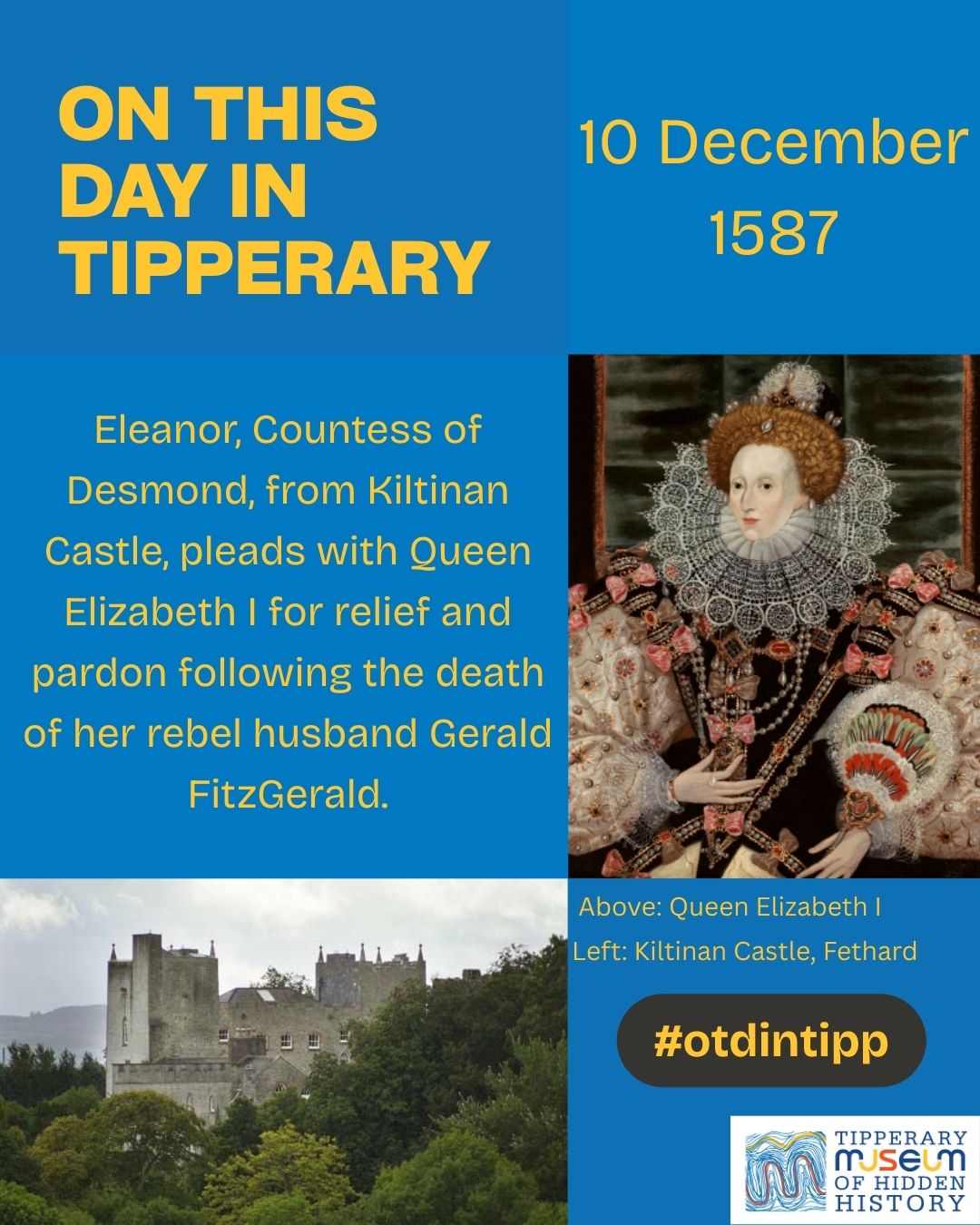
Eleanor remained her husband’s chief counsellor, encouraging compromise with the Crown. However, continued unrest in Munster and the return of fitz Maurice in 1579 pushed Desmond into rebellion. Eleanor tried repeatedly to mediate, even handing over her son for safety, but Desmond was proclaimed a traitor. Though she stayed loyal and endured life on the run, she ultimately surrendered in 1583 and was imprisoned in Clonmel; Desmond was killed soon after. Eleanor spent years in poverty, seeking pensions she was promised but rarely paid. On 10 December 1587, she made submissions to Queen Elizabeth detailing her efforts to meet the Queen’s wishes, and asking for relief and pardon.
In 1597 she returned to Ireland and married Donough O’Connor Sligo. The marriage had been arranged by Robert Cecil, Elizabeth’s chief Royal Minister. To encourage her loyalty, the queen also acknowledged Eleanor's possession of an estate in Tipperary that had been part of her marriage dowry to Desmond but had been since withheld from her by her brother James Butler Despite O’Connor Sligo’s temporary involvement in Ulster rebellion (1599), he survived and remained loyal to the crown. Following his death in 1609, Eleanor retained extensive lands in Sligo, despite legal challenges from his heirs, and lived there prosperously for decades.
By 1635, she held an annual rental income of £289 at her Ballincor Castle residence. She drafted her will on 26 November 1638 and was most likely buried soon after beside her second husband at Sligo Abbey, within an impressive tomb that she had erected in 1624, and which still stands.
Sources:
https://www.dib.ie/biography/fitzgerald-butler-eleanor-a1243


